
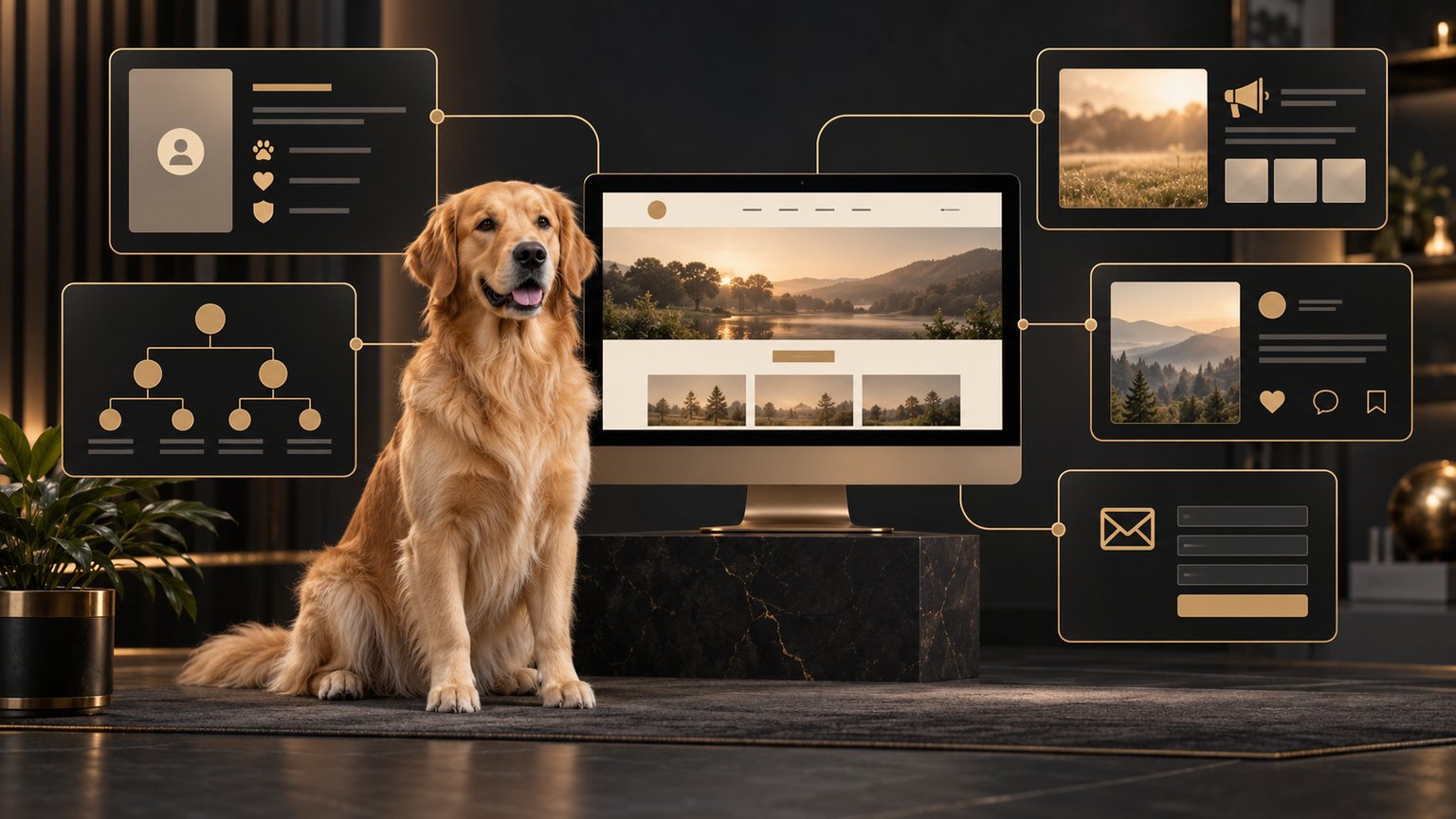
Dog breeder marketing is not simply a way to announce that puppies are available. For a responsible kennel, it is the long-term work of making a breeding programme understandable: who the dogs are, why particular combinations are planned, how health and pedigree information is handled, what life in the kennel looks like and how an interested person can make a considered enquiry.
The aim is not to communicate everywhere or to sell more puppies at any cost. It is to build a clear, consistent information system that helps the right people understand your priorities before they contact you. That system can support reputation, referrals and enquiries, but it cannot replace sound breeding decisions or guarantee a particular business result.
What dog breeder marketing actually means
Marketing often sounds like promotion, but breeder communication has a wider job. A kennel may need to explain its breed focus, breeding goals, health-testing approach, dogs, pedigrees, show or working activity, litter plans, puppy-rearing practices and enquiry process. Each piece helps a reader form a more complete picture.
This makes dog breeder marketing closer to information architecture and reputation building than to constant advertising. The strongest communication does not rely on repeated claims such as “quality puppies” or “responsible breeder.” It shows the evidence behind the kennel: registered names, health results, pedigrees, dated litter information, achievements, photographs and a consistent history.
Start with a clear breeder identity
A kennel identity is more than a logo. It is the recognisable combination of your breed, priorities, tone, visual style and the information you choose to make clear. Before planning posts, write down what someone should understand about your kennel after five minutes on your website.
- Which breed or breeds do you work with?
- What qualities matter in your breeding programme?
- How do health, temperament, structure, working ability or breed type influence your decisions?
- What experience or practical background shapes your approach?
- What should a suitable enquiry understand before contacting you?
These answers create a useful editorial filter. If a post, page or graphic does not help explain the kennel, document its work or guide an enquiry, it may not deserve space in the system.
Use your kennel website as the central information hub
Social platforms are useful for discovery and timely updates, but they are poor long-term archives. Posts move quickly, account rules change and important information becomes difficult to find. Your own website can hold the stable version of the kennel story while other channels point back to it.
A practical website usually needs clear paths to the kennel, breeding dogs, health information, pedigrees, planned or current litters, previous litters and enquiries. The Royal Kennel Club’s website content guidance for breed health communication also emphasises knowing the audience and organising health, breeding and related information around different visitor needs.
If you are planning the structure in detail, see what a dog breeder website should include. The related Dog Breeder Website Design service is focused on building that structure around real kennel information rather than adapting a generic small-business template.
Present breeding dogs and health information clearly
Individual dog profiles are among the most valuable parts of breeder communication. They connect a name and photograph with the details that matter: registered name, call name, date of birth, titles or working results, pedigree, health and genetic tests, and the dog’s place in the breeding programme.
Precision matters. “Health tested” is less useful than naming the relevant test, result and testing body. Genetic results such as clear, carrier or affected should be presented accurately and in context, without turning a dog profile into a medical claim. Where a recognised registry provides a public result, linking to it can help readers verify the information.
The American Kennel Club’s guidance on signs of a responsible breeder points prospective owners towards documented health testing and an established history of dogs. The exact tests and requirements vary by breed and country, so communication should identify the relevant organisation rather than imply a universal standard.
Plan litter communication before puppies are available
Litter communication is easier when it begins before the birth announcement. A planned-litter page or announcement can explain the parents, pedigree relationship, relevant health results, goals for the combination and approximate timing. Later updates can document the litter without forcing every message into a sales format.
A useful sequence may include a planned mating, confirmed pregnancy if the breeder chooses to share it, birth announcement, litter development, individual puppy presentations and a final archive entry. Not every kennel needs every stage, but the information should stay consistent across the website, graphics and social posts.
For the information itself, use the guide to planned litter announcements. The purpose of this marketing system is not to repeat that checklist, but to make sure each litter update has a defined role and an accurate home.
Use social media as distribution, not as your entire archive
Social media can show current kennel life: a show result, training session, health milestone, litter update, new article or behind-the-scenes moment. It can help people encounter the kennel and follow its work over time. It does not need to replace the website.
A sustainable approach starts with useful source material and adapts it. One complete dog profile can support a shorter introduction post. A detailed litter page can support a planned-litter graphic and several dated updates. A website article can become a concise social post that links readers to the full explanation.
Posting frequency should match what you can maintain accurately. A quiet, current profile with meaningful updates is more useful than daily filler followed by months of silence. Platform policies and permitted promotional activity also vary, so check the current rules for each service and location before publishing litter-related content.
Build a consistent visual system
Consistency helps people recognise that a website page, litter announcement and dog presentation belong to the same kennel. It does not require identical templates for every post. A restrained system can use the same logo treatment, colours, type hierarchy, image style and information order while allowing each dog or litter to remain individual.
Breeder graphics work best when design supports the information. Names should remain readable, photographs should be prepared carefully, and pedigrees, health results or titles should not be reduced to decorative fragments. The Dog Breeder Graphics service covers litter, stud dog and breeding-dog presentations built around this kind of kennel-specific material.
Create useful breeder content
Educational content can answer questions that repeatedly arise during enquiries and reveal how the breeder thinks. Suitable topics may include the breed’s needs, the kennel’s puppy-rearing routine, how particular health tests are interpreted, what a pedigree shows, how homes are selected or what owners should prepare before collection.
The value is not in publishing a high volume of generic articles. Choose questions connected to your real programme and experience. If you cannot support a medical, legal or country-specific claim accurately, keep the explanation within your competence and point readers to the relevant professional or official organisation.
Make enquiries easy and clear
An enquiry path should explain what information you need and what happens next. A written form or email route can collect consistent details about the person’s household, experience, expectations and plans while keeping the project or placement discussion documented.
A clear process does not need to promise immediate availability. It can state whether the kennel keeps a waiting list, how future plans are announced and when individual puppy decisions are made. If someone first discovers the kennel elsewhere, your website should give them a stable place to verify the information before enquiring. The guide to where responsible breeders can promote a litter compares those discovery channels without treating any one platform as universal.
Keep information current and consistent
Outdated information weakens an otherwise thoughtful system. A planned litter should eventually become a current or previous litter. Dog profiles should reflect new results and titles. Availability statements should be dated or removed when they no longer apply. Contact routes and external profiles should use the same kennel name and current website.
A quarterly review is often more realistic than constant redesign. Check the homepage, dog profiles, litter pages, contact information and the social profiles that matter most. Record what needs an update and correct the central website first, then the distributed versions.
Build a system you can maintain
A practical content system can be organised around a few repeatable source records:
- Dog record: photographs, registered details, pedigree, health results and achievements.
- Litter record: parents, purpose, dates, updates, puppy information and final archive.
- Kennel record: identity, breeding priorities, facilities or routines, references and contact process.
- Content record: frequently asked questions, educational topics and dated news.
From these sources, the website holds the complete information; social posts distribute selected updates; graphics make key announcements easier to recognise; and the enquiry path brings the reader back to a documented process. This avoids rebuilding the same information from scratch for every platform.
Practical takeaway
Effective dog breeder marketing is a maintained communication system, not a stream of sales messages. Start with accurate kennel, dog, health and litter information on your own website. Reuse that information consistently across suitable channels, keep it current and make the written enquiry path easy to understand. The result should help people evaluate the breeding programme—not pressure them into a quick decision.
Would you like a clearer system for your kennel content?
Explore breeder-focused WordPress website design and custom breeder graphics, or send a written project enquiry with the materials you would like to organise and present.