
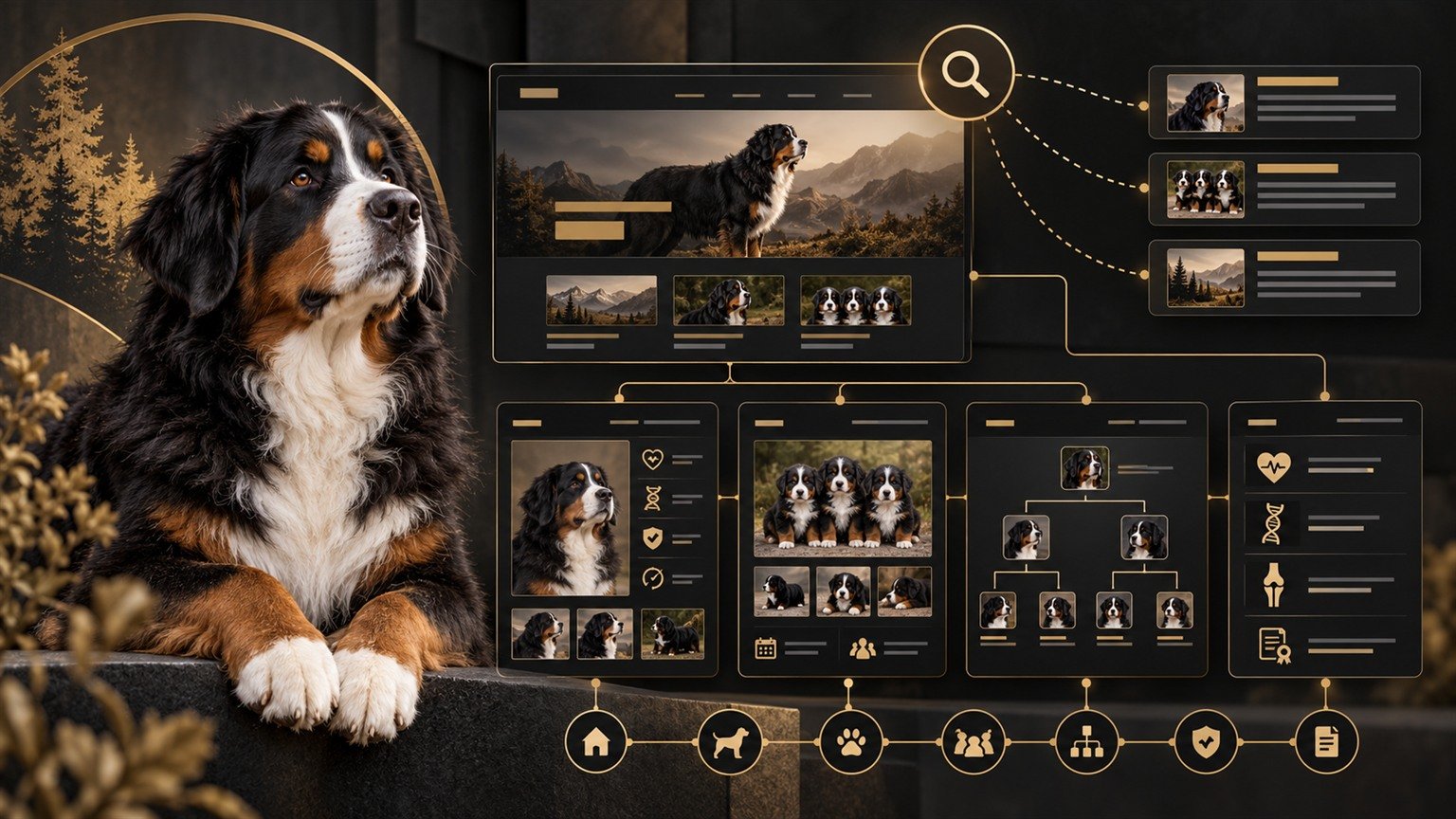
Dog breeder website SEO is not about repeating the same breed and location keywords on every page. It is about organising genuine kennel information so search engines can understand the site, match the right page to the right search, and help visitors find the dogs, litters, pedigrees, health information and contact details they need.
A kennel already has much of the material that can make a useful website: registered dogs, planned and previous litters, health results, pedigrees, photographs, show or working achievements and practical breeding experience. The SEO work is to present that material clearly, connect related pages and keep the site technically accessible. This guide focuses on those breeder-specific foundations rather than generic advice about “adding keywords”.
Quick answer
A dog breeder or kennel can improve website SEO by creating a logical site structure, giving important topics their own useful pages, writing unique titles and headings, building informative dog and litter profiles, linking related information, optimising images, supporting mobile visitors and keeping important URLs crawlable and indexable. Search Console can then show which queries and pages are beginning to gain visibility.
1. Start With a Clear Kennel Website Structure
A clear structure helps both visitors and search engines understand how the site fits together. Most kennel websites benefit from a focused Home page, an About page, a Dogs section, litter information and a Contact page. Individual dog profiles, breed information and educational articles can sit beneath that core when they serve a real purpose.
The navigation should reflect how prospective puppy owners and other breeders actually look for information. Someone evaluating a planned litter may want to move from the litter page to the sire and dam, then to health results, pedigree context and the enquiry process without returning to the homepage after every step. The guide What Should a Dog Breeder Website Include? explains the wider content foundation in more detail.
2. Give Important Topics Their Own Useful Pages
Putting every dog, litter, result and contact detail on one long homepage makes it difficult to understand what each section is about. Separate pages can serve separate needs: an individual stud dog profile, a planned litter page, a health-testing explanation or a page about the kennel’s breed and programme.
That does not mean creating a new page for every keyword variation. Create a page when there is a real topic or user need—not just another phrase to target. A short page called “best Fila breeder” that repeats the homepage adds little. A detailed dog profile with identity, pedigree, health records, results and related litters has a clear purpose.
3. Use Descriptive Titles and Headings
Each important page needs a concise, descriptive title tag and one clear main heading. “Home | Welcome” tells a searcher very little. A title such as “Fila Brasileiro Breeder in [Region] | Kennel Name” can be more informative when breed and broad location genuinely describe the kennel. Location is not compulsory; it should only appear where it helps the intended audience.
Use H2 and H3 headings to organise sections for readers, not to repeat the same phrase. A dog profile might use headings for Pedigree, Health Testing, Results and Offspring. A litter page might use Parents, Expected Timing, Health Context and Updates. The title, H1 and sections should all support one recognisable page purpose.
4. Build Individual Dog Profiles With Real Information
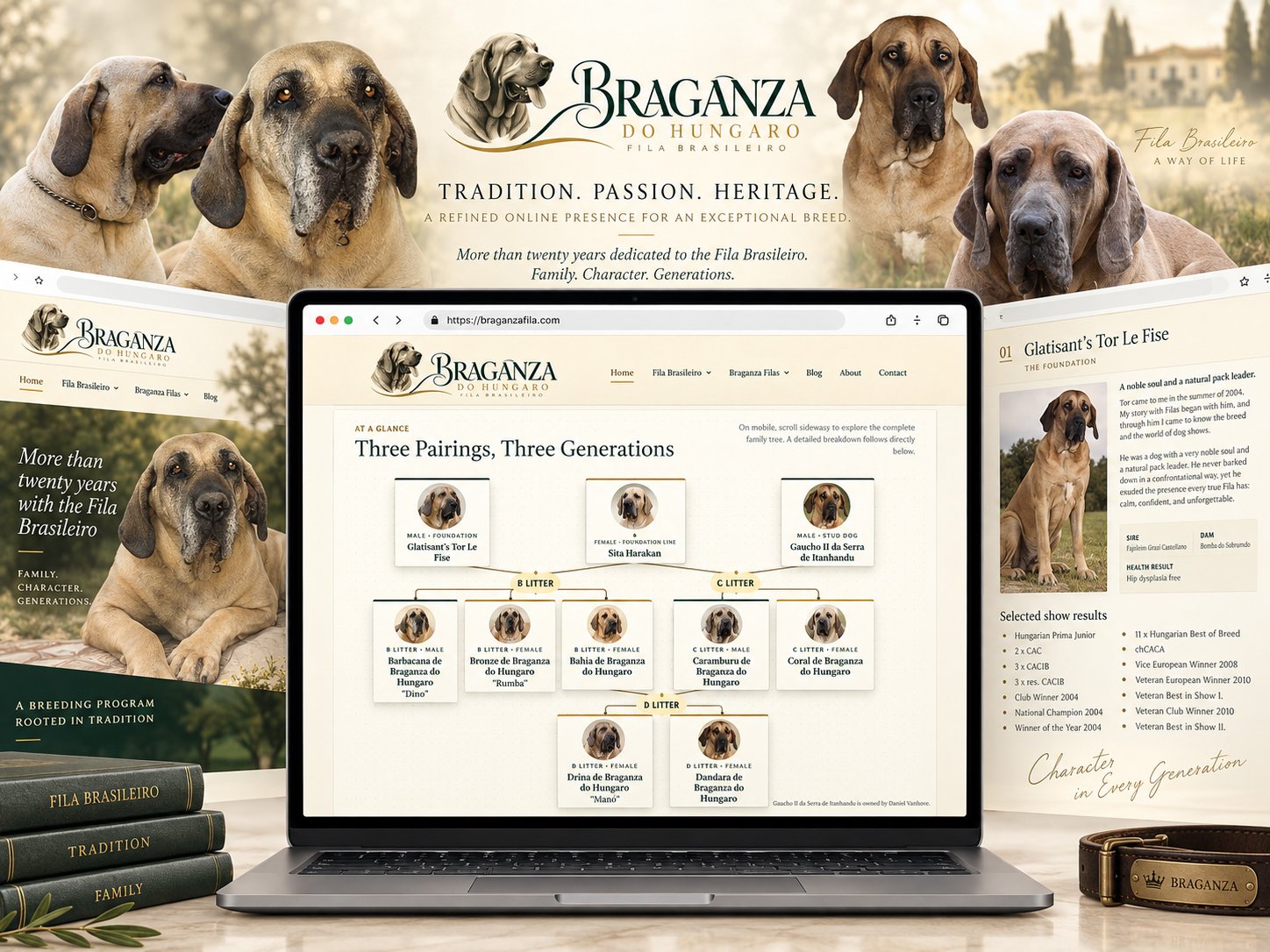
Individual dog profiles can become some of the most valuable pages on a breeder website. They naturally combine the dog’s registered name, kennel name, breed, sire and dam, pedigree, health testing, photographs, show or working results and links to related litters. This is useful content for people researching the dog, the family or a proposed mating.
A profile should be more than a gallery and a list of titles. Explain abbreviations where the audience may not recognise them, link to verifiable records when appropriate, and distinguish screening results from broader claims about health. The articles How to Read a Dog Pedigree and Health Testing for Breeding Dogs provide useful supporting context.
5. Keep Litter Pages Clear and Current
Planned, current and previous litters serve different visitor needs. A planned litter page may introduce the proposed parents, estimated timing and health or pedigree context. A current litter page can provide confirmed dates, updates and the actual status of the puppies. A previous litter page becomes an archive of the pairing, development and offspring rather than an active availability page.
Use visible status language and update it when circumstances change. An old litter page should not look like a current offer. Keeping the page can still be valuable when it documents the kennel’s breeding history, but the date, outcome and current status should be unambiguous.
6. Connect Related Pages With Internal Links
Internal links help visitors continue a meaningful path and help search engines discover and interpret related pages. A litter page can link to the sire and dam. A dog profile can link to pedigree guidance, health information and offspring. A health article can link to profiles where the subject appears in practice. Breed education can lead naturally to the kennel’s dogs and breeding programme.
Use anchor text that describes the destination, but keep it natural. Repeating an exact keyword in every link is unnecessary. The question to ask is simple: would this link help a reader understand the dog, litter or topic without having to search the site again?
A kennel’s strongest SEO structure often follows the real relationships in its breeding programme: dogs connect to pedigrees, health records and results; litters connect to parents and offspring; educational content explains the information those pages contain.
7. Optimise Dog and Litter Images Responsibly
Breeder websites are highly visual, so image handling affects both usability and performance. Rename files descriptively before upload when practical: braganza-fila-male-show-profile.jpg gives more context than IMG_8472.jpg. Google describes filenames as a light contextual clue, not a shortcut that outweighs the page itself.
Write concise alt text that explains the image in its page context. Do not turn it into a list of breed and puppy keywords. Resize and compress photographs for their real display size instead of uploading every 8–15 MB camera original. Preserve enough quality to show the dog accurately, but avoid making a mobile visitor download detail that will never be displayed.
8. Protect Mobile Usability and Performance
Galleries, pedigree tables, litter cards and large photographs can make a kennel site difficult to use on a phone. Test navigation, text, forms, tables and image galleries at small widths. Pedigrees may need a responsive table or a controlled horizontal scroll area rather than shrinking text until it becomes unreadable.
Core Web Vitals describe loading performance, responsiveness and visual stability. They are useful experience signals, but a perfect PageSpeed score does not guarantee rankings. Focus on practical improvements: correctly sized images, reserved image dimensions to reduce layout shift, lightweight pages, dependable hosting and only the plugins the site genuinely needs.
9. Add Geographic Context Without Doorway Pages
Country, region or broad location can help international visitors understand where a kennel operates and whether travel or transport may be relevant. This information can appear naturally on the About and Contact pages, in selected page titles and through recognised breeder-club or registry profiles.
A breeder does not need to publish a precise home address when privacy or safety makes that inappropriate. Avoid creating near-identical pages for many cities simply to attract local searches. One honest location statement is more useful than a network of pages that all lead to the same kennel information.
10. Publish Useful Breeder Content When You Have Something to Add
Educational content can strengthen the site’s topical depth when it reflects genuine experience. Useful subjects may include pedigrees, breed-relevant health testing, genetics, litter planning, puppy preparation, breeder communication and website guidance. These articles can answer early-stage questions and link readers to the related dogs, litters or services.
Weekly blogging is not a requirement. A small number of accurate, maintained articles is better than an abandoned blog filled with short generic posts. Publish useful content only when the breeder can add real expertise or practical value, and review it when health schemes, procedures or the kennel’s own information changes.
11. Avoid Thin, Repeated and Copied Content
Common problems include using the same two-sentence biography on every dog profile, copying one litter description for several pairings, generating multiple near-identical location pages, or reproducing breed information from a club website. This gives visitors little reason to use one page rather than another and makes each page’s purpose harder to distinguish.
Write from the kennel’s own records and experience. Each dog profile can explain what is specific to that dog. Each litter archive can document that pairing and outcome. Breed education should add original context instead of rephrasing a standard. Google’s people-first guidance emphasises original value, while its spam policies warn against scaled or doorway pages created mainly to capture similar searches.
12. Keep the Technical SEO Foundations Sound
Important public pages need to return normally, use HTTPS and remain available to search engines. Check that accidental noindex settings, password protection or robots rules are not hiding the content you want discovered. A sitemap helps search engines find preferred URLs, while self-referencing canonicals help clarify the main address of each page.
Use readable URLs and preserve them when possible. If a page must move, redirect the old URL to the closest relevant replacement instead of leaving a broken link or sending everything to the homepage. Fix important 404s, keep navigation crawlable and make sure essential pedigree or health information exists as text—not only inside a graphic that cannot provide the same accessible detail.
13. Use Google Search Console as a Learning Tool
Search Console can show which queries triggered impressions, which pages appeared, how many clicks they received, their click-through rate and an average position metric. The indexing and sitemap reports can also help identify whether important pages are being discovered and processed.
Read early data cautiously. Two or three impressions do not prove that a page title, paragraph or keyword is wrong. New and small sites need time to accumulate enough information for patterns to become meaningful. Look for repeated themes across a sensible date range, compare pages serving the same intent, and make changes because the page can serve users more clearly—not because one isolated position moved.
14. Avoid Common Dog Breeder Website SEO Mistakes
- Every page uses the same vague title.
- Dogs appear only in a gallery, with no individual profiles.
- Large camera originals slow every page.
- Previous litter pages still look like current puppy availability.
- Related dogs, litters and educational pages are not linked.
- Pedigree and health details exist only inside images.
- Breed and location phrases are repeated unnaturally.
- A thin blog was started for SEO and then abandoned.
- Important pages are blocked, noindexed or missing from the site’s structure.
- The kennel relies only on Facebook or Instagram instead of maintaining an owned, searchable information source.
15. Practical Dog Breeder Website SEO Checklist
Essential
- Clear navigation and page structure.
- Unique, descriptive titles and one clear H1 per page.
- Crawlable links and useful text content.
- Mobile-friendly layouts, forms, images and tables.
- Correct indexability, canonical URLs and a working sitemap.
Strongly recommended
- Structured profiles for important breeding dogs.
- Planned, current and previous litter pages with clear status.
- Readable pedigree, health-testing and results context.
- Natural links between related dogs, litters and guides.
- Compressed, correctly sized images with useful alt text.
- Search Console monitoring based on meaningful trends.
Depends on the kennel
- An educational blog with original breeder expertise.
- Multilingual content built for distinct audiences.
- Local SEO beyond basic country or region context.
- Detailed litter and result archives.
- Advanced structured data supported by the page’s visible content.
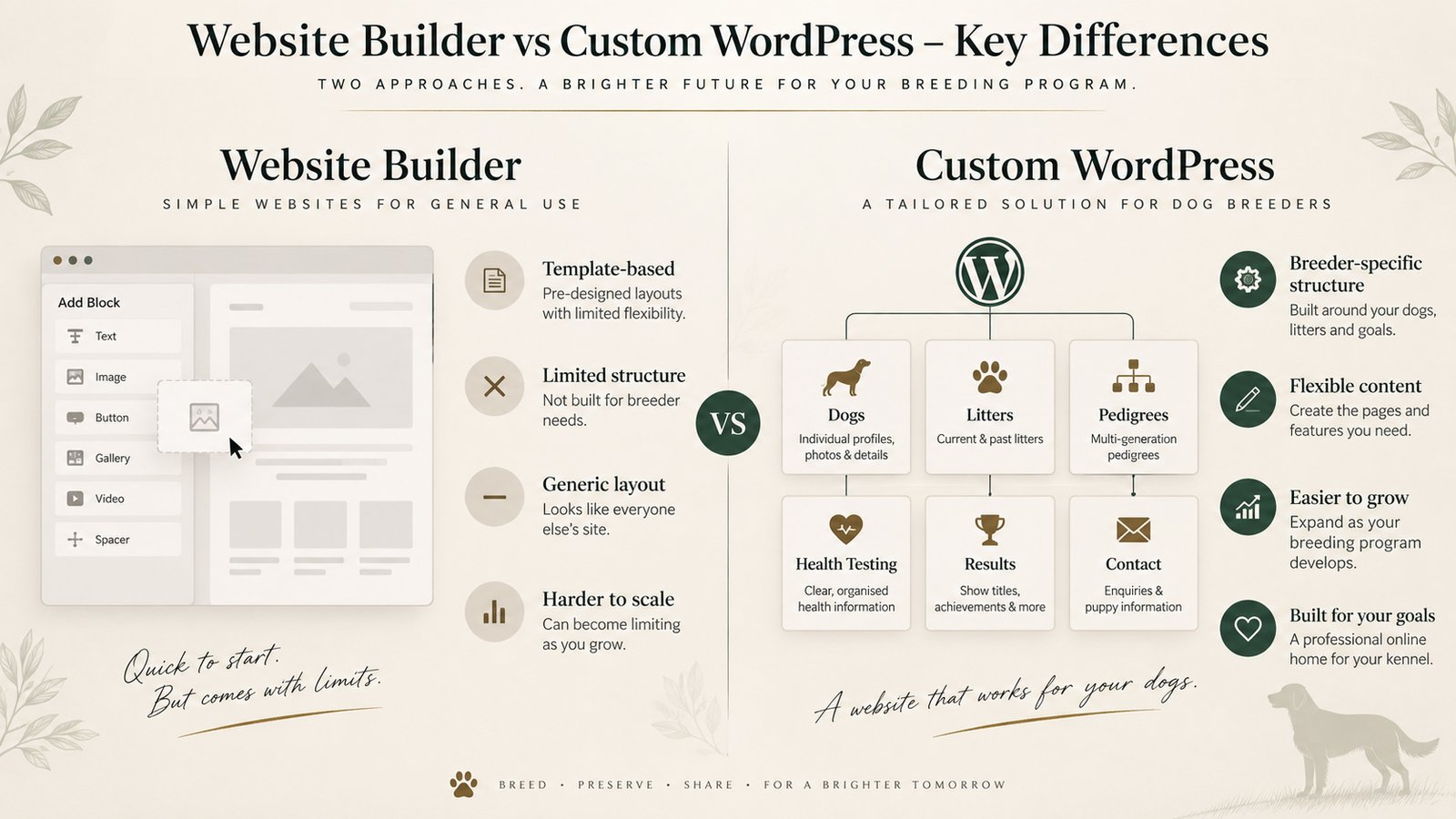
Platform choice also affects how comfortably this structure can be maintained. If you are deciding between a hosted builder and a more flexible site, see Dog Breeder Website Builder vs Custom WordPress.
Final takeaway
Good dog breeder website SEO is not a separate layer added after the kennel information is finished. Its strongest foundation is a clear structure, credible breeder knowledge, well-organised dog, litter, health and pedigree content, natural internal links and a technically accessible website. When those elements work together, search engines can understand the site more easily—and visitors can make better-informed decisions.
Need a breeder website built around clear structure and real kennel information?
BodArtDogs creates custom WordPress websites for dog breeders and kennels, with breeder-focused structure for dogs, litters, pedigrees, health information and professional communication. Explore Dog Breeder Website Design →
Sources & Further Reading
- Google Search Central: SEO Starter Guide
- Google Search Central: Influencing title links
- Google Search Central: Image SEO best practices
- Google Search Central: Core Web Vitals and search results
- Google Search Central: How to use Search Console
- Google Search Central: Spam policies
- WordPress Developer Resources: Optimization