
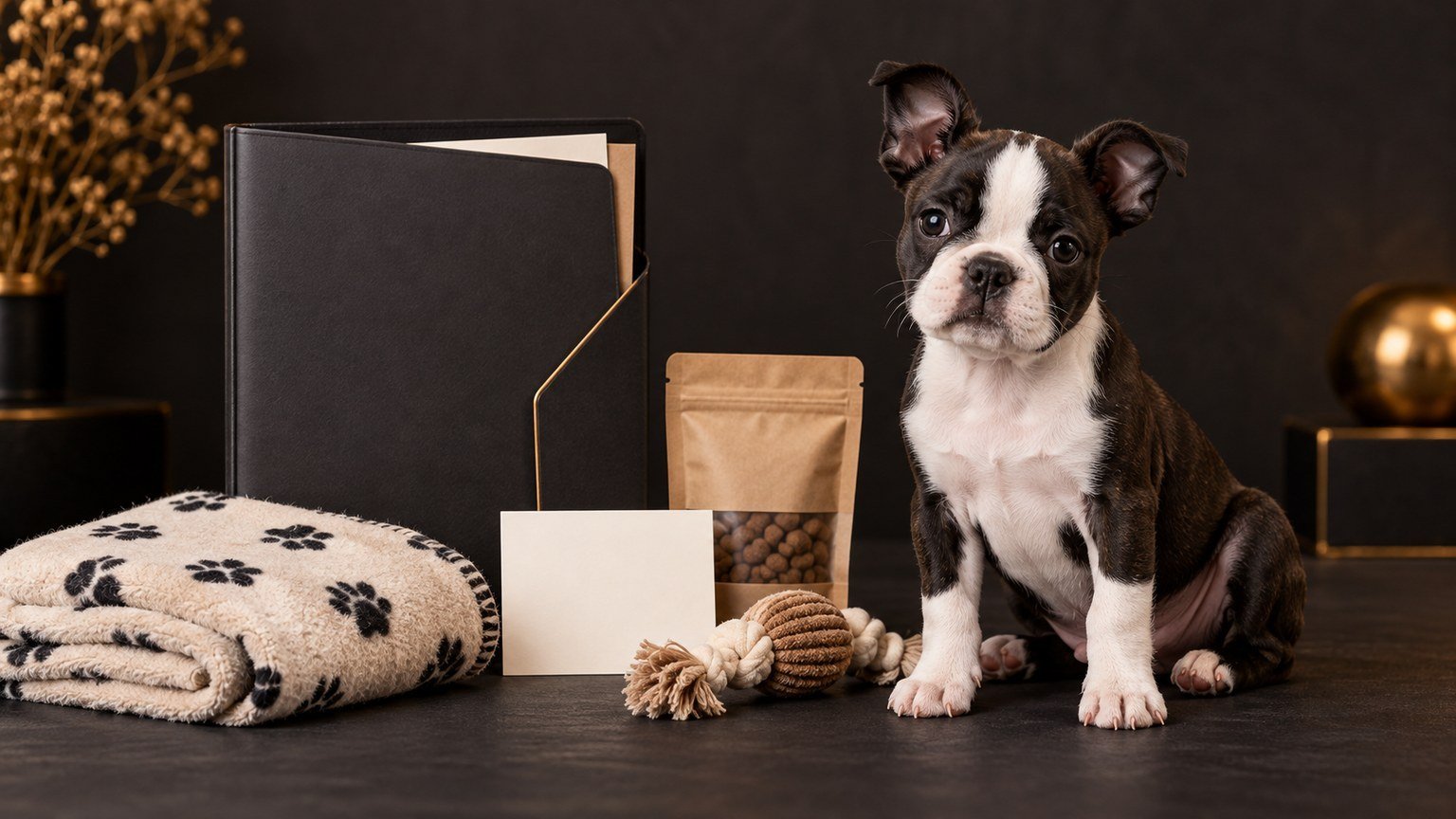
A puppy pack is the collection of information, records and practical items a breeder prepares for a puppy’s move to a new home. Its purpose is not to create the biggest possible gift bag. A useful pack helps the new owner understand this particular puppy: its identity, routine, care, background and the breeder’s recommendations.
The exact contents will vary. Country, registry, breed, veterinary arrangements, transport method and the breeder’s own programme can all affect what is appropriate. The exact documents vary by country, registry and breeder circumstances, so breeders should check the current requirements that apply to them.
What is a puppy pack?
A puppy pack is best treated as a handover system rather than a box of extras. It can combine a clear information folder, the records that belong with the puppy and a few optional objects that make the transition easier. Some breeders use a printed binder, some provide a digital folder, and many use both.
The most effective packs separate three kinds of material:
- Puppy-specific information: details that describe this individual puppy and its established routine.
- Formal records: veterinary, identification, registration, pedigree and contractual documents supplied in the form required for that puppy and location.
- Practical guidance: the breeder’s notes for feeding, grooming, settling in, training and ongoing contact.
This structure helps the new owner find important information quickly instead of searching through loose papers, product leaflets and decorative items.
Start with clear puppy identification
Open the pack with a simple summary page for the individual puppy. Include the puppy’s call name and registered name if available, breed, sex, date of birth, colour or markings, and the names of the sire and dam. Add any identification or registration references that are appropriate to share.
If a microchip has been fitted, explain what information the new owner is receiving and what action may be needed next. Do not assume that one transfer process applies everywhere: databases, forms, deadlines and responsibilities differ between countries and organisations. Link to the relevant official source or provide the correct current form for your own circumstances.
Record the feeding routine precisely
A practical feeding sheet should describe what the puppy has actually been eating before departure. Record the food, the form in which it is served, the usual meal times and the portion information you currently follow. Note any individual observations that the new owner should know, without turning the handover sheet into veterinary advice.
A small sample of the familiar food can be helpful when transport allows it, but it is optional. The written information matters more because packaging can be lost and feeding arrangements may need to be discussed with the new owner’s veterinarian. Avoid promising that one routine will suit the puppy indefinitely.
Describe the puppy’s daily routine
Moving home changes almost everything around a puppy. A short account of the familiar day gives the new owner a realistic starting point. You might describe usual sleeping and waking patterns, toilet breaks, mealtimes, calm periods, play and the way the litter has been settled at night.
Keep the notes specific and honest. If a puppy is only beginning crate familiarity or toilet training, say so. “Introduced to” is not the same as “fully trained”. Clear wording reduces unrealistic expectations and supports continuity during the first days.
Include health and veterinary records without writing a treatment plan
Provide the health or veterinary records that belong with the puppy, such as documented examinations, vaccinations or parasite-control treatments already carried out. These records should state what was actually done and by whom. The new owner can then share them with their own veterinarian.
Do not replace formal records with a decorative summary, and do not prescribe future vaccination, medication or treatment in a general puppy-pack article. Veterinary schedules depend on the puppy, product, location and professional advice. A breeder-facing handover note can explain where the official record is located and encourage the owner to discuss ongoing care with their veterinarian.
Guidance from both the Royal Kennel Club and the American Kennel Club includes health records and care information among common puppy-pack materials. Their examples also show why breeders should adapt the pack to their own registry and country rather than copy a universal document list.
Organise microchip, registration and ownership information
Microchip details, ownership-transfer information, registration applications and certificates may all be important, but they are not interchangeable. Identify each document clearly and explain its purpose in plain language. Where a process must be completed by the breeder, the new owner or both, state the next step without making a universal legal claim.
Check names, numbers and signatures before the puppy leaves. A simple handover checklist can confirm that the correct documents were given for the correct puppy. This is especially useful when several littermates leave within a short period.
Add pedigree and registration documents where relevant
If the puppy is registered, supply the appropriate certificate, application or transfer information when available under the relevant registry’s procedure. If a document will follow later, explain that clearly and keep a record of what remains outstanding.
A pedigree can help the new owner understand the puppy’s family, but it may contain abbreviations, titles and health information that are unfamiliar. A short explanatory note can make it more useful. For a fuller introduction, link to How to Read a Dog Pedigree rather than trying to fit a complete pedigree lesson into the pack.
Summarise parent health testing accurately
A concise sire-and-dam page can list the relevant health tests and show where detailed results can be verified. Use exact test names, distinguish DNA status from clinical screening, and avoid converting nuanced results into vague claims such as “genetically perfect” or “completely healthy”.
Not every result belongs on one sheet. Full certificates, database links or a well-structured page on the kennel website may be clearer. The puppy pack can act as a reliable index to that information. Breeders who want to explain the wider purpose and limits of testing can also share Health Testing for Breeding Dogs.
Provide breed-specific grooming and care notes
General advice is less helpful than a short description of what this breed and this puppy are already used to. Note the grooming tools or handling routines that have been introduced, coat-care expectations, nail handling, ear or dental-care familiarity, and any practical breed-specific considerations that the owner should discuss with appropriate professionals when needed.
Keep recommendations proportionate. The pack does not need to become a product catalogue, and it should not imply that every owner must buy the same brand. Explain the function of an item or routine so the owner can make an informed choice.
Explain early training and socialisation honestly
Describe the environments, household sounds, surfaces, handling and age-appropriate experiences the puppy has encountered. Include the cues or routines you have begun to use. This helps the new owner continue consistently while understanding that early exposure is a foundation, not a guarantee of future behaviour.
A short settling-in note can cover rest, supervision, gradual introductions and the importance of giving the puppy time to adjust. Keep the language supportive rather than absolute, and direct individual behavioural or health concerns to a suitably qualified professional.
Make breeder contact and follow-up easy
Place the breeder’s current contact details somewhere obvious rather than hiding them among promotional material. Explain the preferred written contact route and what kinds of updates are helpful. If you ask owners to report changes of address, health findings or achievements, say so clearly.
Follow-up is easier when both sides know what to expect. You might include a suggested first update, a private puppy-owner resource or links to current guidance on the kennel website. Keep any community invitation optional and protect the privacy of other owners.
Choose optional practical items with a purpose
A small blanket carrying a familiar scent, a safe familiar toy, a collar, a food sample or a printed guide can make the handover feel thoughtful. None of these items is essential for every breeder, and transport may limit what can travel with the puppy.
Choose items for usefulness and safety rather than volume. Avoid turning the pack into an assortment of branded samples that obscures the important records. If an item needs supervision or has a limited period of use, make that clear.
Keep formal documentation separate from everyday guidance
The puppy pack can contain or point to formal records, but it should not blur their status. Contracts, registration certificates, ownership-transfer forms, veterinary records, export documents and breeder declarations may require original formats, signatures or procedures. Keep them clearly labelled and separate from informal care notes.
A useful approach is to place everyday guidance in one branded folder and formal documents in a distinct section or envelope. Digital copies can be organised in the same way. This makes the pack easier to update without accidentally changing or replacing an official record.
Use a digital companion, not only printed pages
Printed material is valuable at handover, but some information will change. A private or public puppy-owner resource on the kennel website can hold updated guidance, links and longer explanations. The printed pack can then include short, stable instructions and a clear route to the current version.
A breeder website can also organise litter background, parent profiles, pedigree references and health-test explanations without forcing everything into one folder. If that structure is missing from your current site, see Dog Breeder Website Design.
Final puppy pack checklist
- Puppy identity and breeder contact summary
- Current feeding information and daily routine
- Health and veterinary records supplied for this puppy
- Microchip and ownership-transfer information where applicable
- Registration and pedigree documents or a clear note about what will follow
- Accurate sire, dam and relevant health-testing references
- Breed-specific grooming and care notes
- Early training, socialisation and settling-in information
- Formal documents separated and labelled clearly
- Optional familiar or practical items chosen with a purpose
- A record of what was handed over and what action remains
A good puppy pack is not defined by cost or size. It is defined by clarity: the right records for the individual puppy, useful guidance based on the breeder’s real routine, and an organised path to further information. When the pack is accurate and easy to navigate, it supports both the new owner and the breeder long after handover day.
Would you like a clearer way to organise puppy information for new owners? Explore Dog Breeder Graphics and Dog Breeder Website Design, or send a project enquiry.