
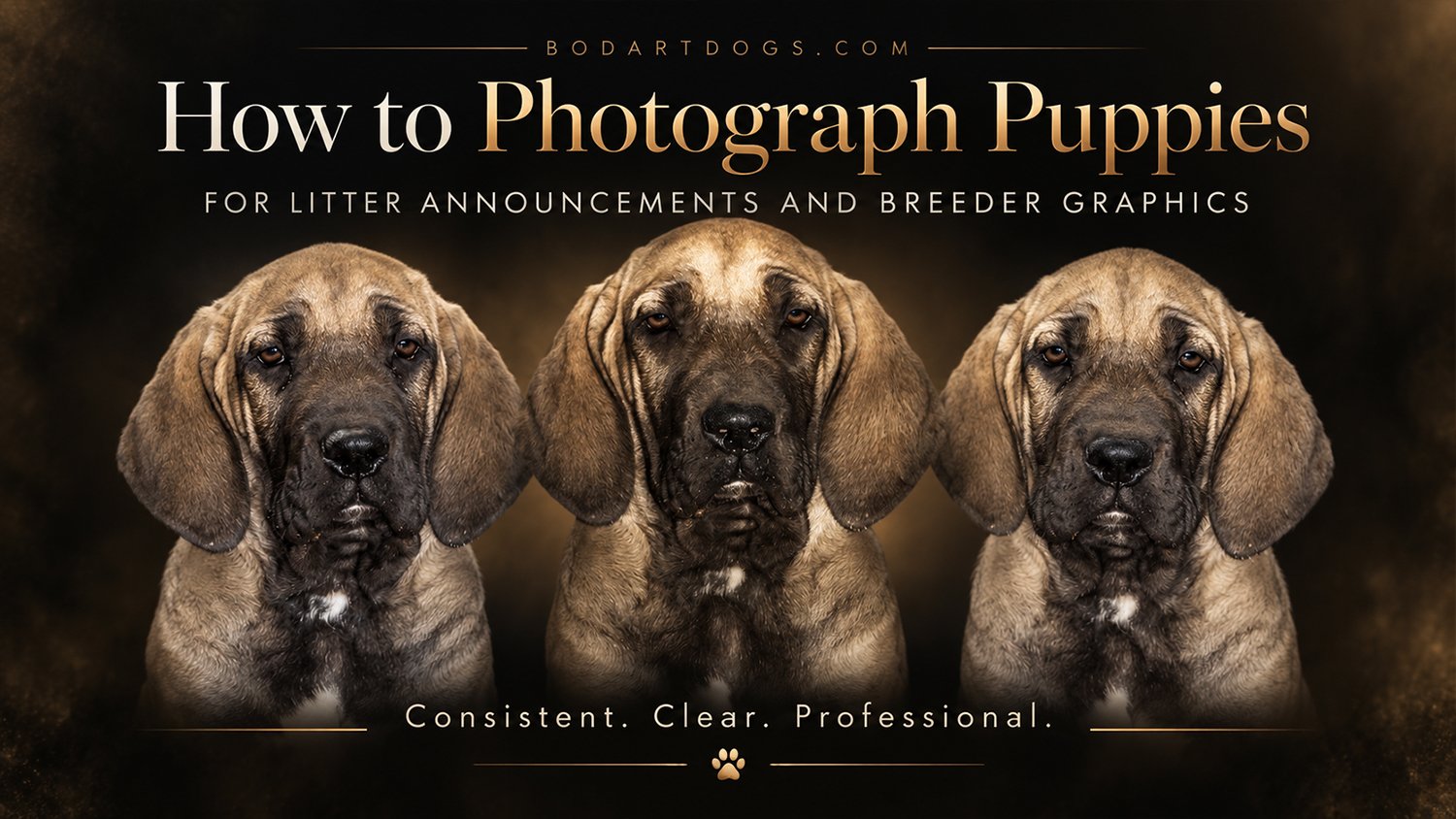
Good puppy photographs do more than show that a litter is cute. For a breeder, they help prospective homes recognise individual puppies, follow their development and understand how the litter is being raised. They also give a designer consistent, usable material for a litter announcement, puppy presentation or availability graphic.
This guide focuses on photographing puppies for breeder communication: planned and current litter updates, individual puppy profiles, kennel websites and professionally designed graphics.
Decide what the photographs need to communicate
Start with the purpose of the images. A photograph for a weekly litter update does not need to do the same job as the main image in an individual puppy presentation.
- Litter announcement: clear photographs of the sire and dam, ideally with similar framing and image quality.
- Individual puppy presentation: a consistent portrait, a standing or side view where appropriate, and one natural image showing personality.
- Weekly litter update: documentary photographs that show development, socialisation and everyday life.
- Availability card: one strong, current image with enough clear space around the puppy for a name and essential information.
- Kennel website profile: a small, coherent selection rather than many near-identical photographs.
If you are preparing a planned pairing or birth announcement, it also helps to decide which information will accompany the images. Our guide to planned litter announcements explains which details breeders may want to present alongside the parents.
Create a repeatable setup for the whole litter
Consistency is more valuable than an elaborate set. Choose one safe location, one background and one general camera position for every puppy. Keep the distance and framing similar. This makes the litter feel like a group while still allowing each puppy to remain recognisable.
A simple blanket, clean wall, neutral floor or quiet outdoor area often works better than a busy themed background. Avoid objects that compete with the puppy, and remove bowls, cables, crates or household clutter that may distract from the subject.
Use soft, natural light
Window light or open shade usually gives softer results than direct sun or a small on-camera flash. Position the puppy so that the face and eyes receive light without harsh shadows. With very young puppies, keep sessions calm, short and appropriate for their age.
Dark-coated dogs may need a lighter background and careful exposure so that the coat retains detail. Very pale puppies may need a slightly darker or more neutral background to avoid disappearing into the image. The American Kennel Club’s dog photography guidance also recommends thinking about the animal’s distinctive shape and features when composing a portrait.
Photograph at the puppy’s level
Photographs taken from adult standing height often make the puppy look small and distort the body. Lower the camera to the puppy’s eye or chest level. For a side view, keep the camera parallel to the body rather than pointing down from above.
Leave some space around ears, paws and tail. Tight crops can be difficult to use in a graphic because different platform formats may require the image to be repositioned. A designer can crop a wider photograph, but cannot restore a paw or ear that was outside the original frame.
Plan short sessions around the puppies
Choose a time when the puppies are comfortable: after they have settled, but before they become tired or frustrated. Prepare the background and camera first so that each puppy only needs to be in position briefly.
- Work with another person when possible: one can keep the puppy safe while the other photographs.
- Use a quiet sound, toy or small age-appropriate reward to bring the puppy’s attention towards the camera.
- Take several frames in a short burst because expressions and ear positions change quickly.
- Stop if the puppy becomes uncomfortable. A calm, safe session matters more than a perfect pose.
Capture both identity and personality
A useful breeder photo set usually contains more than one type of image. The main portrait should make the puppy easy to identify. Supporting photographs can show movement, curiosity, interaction with people or age-appropriate enrichment.
Do not try to communicate a fixed adult temperament from one appealing photograph. Use images as part of an honest, age-appropriate introduction, supported by the breeder’s ongoing observations.
Keep identification and filenames organised
When several similar puppies are photographed on the same day, organisation prevents expensive mistakes. Use coloured collars or another safe identification method already used in the litter, and record each puppy before moving to the next.
Rename selected files clearly, for example: kennel-litter-blue-male-6-weeks-portrait. Keep registered names, call names, sex, colour and availability status in a separate written list. Do not rely on memory or on the order in which files appear on a phone.
Select photographs for design, not only for social media
The image with the most charming expression is not always the easiest one to design with. For a litter announcement or puppy card, look for:
- sharp eyes and clear facial detail;
- a complete outline without cropped ears or paws;
- enough resolution for the intended format;
- clean separation between the puppy and the background;
- space for text without covering the puppy;
- similar light and colour across the litter.
A professional designer can improve colour, remove small distractions and create a cleaner presentation, but a sharp, well-lit original always provides the strongest starting point. Editing should improve presentation without misleadingly changing the puppy’s structure, colour, markings or any health- or conformation-related feature. Explore custom litter announcement design or the broader range of graphics for dog breeders if you want the selected photographs presented as a consistent visual set.
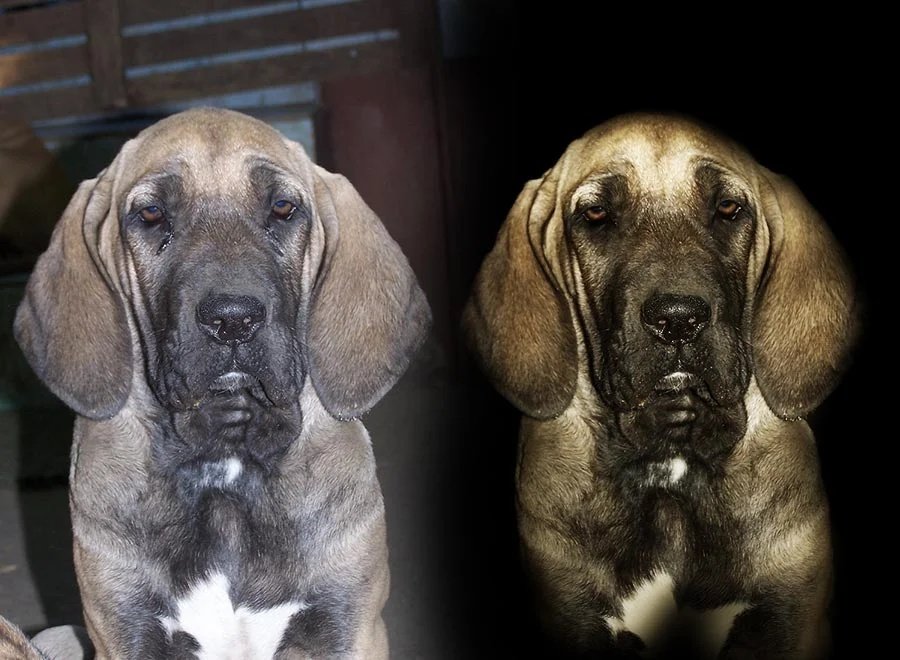
Build a consistent photography routine
You do not need a studio for every update. A repeatable routine is more useful: the same safe location, similar light, consistent identification and a short shot list at each milestone. Over time, this creates a visual record that works across social posts, individual puppy presentations and the kennel website.
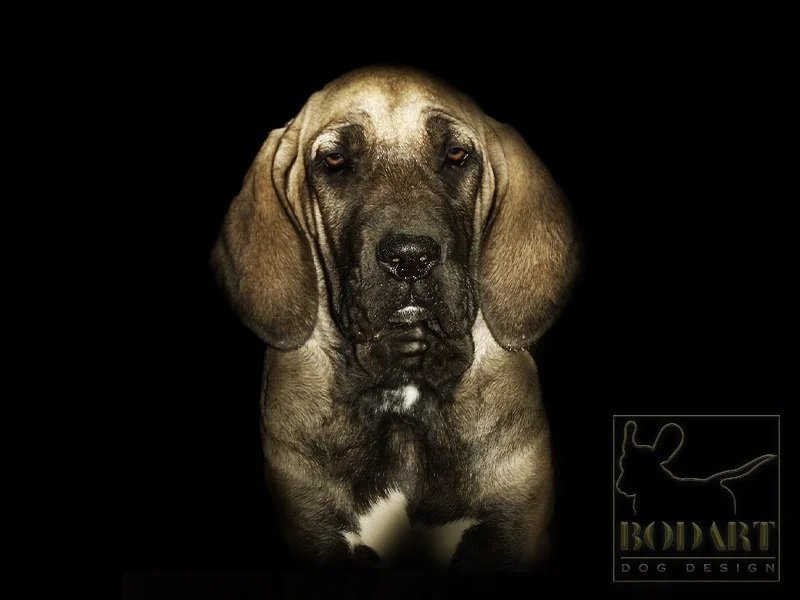
Good breeder photography is not about making every puppy look identical. It is about presenting each puppy clearly while giving the whole litter a coherent, trustworthy visual story.
Planning a litter announcement or puppy presentation?
Explore custom litter announcement design, or send a project enquiry if you would like help turning your photographs into a clear, consistent breeder graphic.